

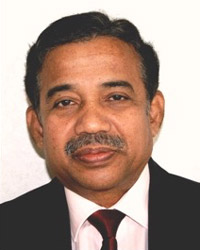
 Dr. H N Mallick
MD, PhD, FAMS Professor Physiology
AIIMS Delhi, India
Email id: drhmallick@yahoo.com
Phone no: +91-9810755486
Activities in brainstem reticular and basal forebrain activating system produce the state of arousal. The Ascending Reticular Activating System (ASRS) along with its imbedded neurotransmitters systems project widely to the cortex embracing thalamus, hypothalamus and basal forebrain on the way. The dorsal ASRS pathway originates in pons and midbrain reticular formation from LDT/PPT cholinergic and glutamatergic neurons and which project to cortex through nonspecific intralaminar and midline thalamic nuclei. The ventral ASRS originates in pontine and midbrain regions and projects to the lateral and tuberomammillary (TMN) nuclei of thalamus as well as the basal forebrain.
Sleep Secrets Nonadrenergic neurons of the locus coeruleus and serotonergic neurons of the dorsal raphe contribute to both pathways and send direct projection to cortex as do TMN histaminergic and LH orexinergic neurons.
- Consolidate wakefulness (Increase duration of long waking bouts)- Stimulates LC, DRN, TMN.
- Inhibit REM Sleep
- Increase wakefulness in periods of starvation
Suprachiasmatic nucleus via dorsomedial hypothalamus sends GABAergic (inhibitory neurotransmitter) projections to Ventrolateral Pre-optic area
Ventrolateral Preoptic Area(VLPO). It releases GABA and Galanin and inhibits LC, DRN, TMN and Orexinergic neurons. (Flip-Flop Model)
Spindles are generated by activity of GABAergic Reticular and perigeniculate nucleus of Thalamus.
Delta waves are generated by activity of thalamocortical neurons.
Adenosine.
*Adenosine causes presynaptic inhibitory effects on glutamergic cortical neurons, wake active cholinergic and orexin neurons and on GABAergic projections on VLPO.
*Adenosine meditaes its sleep promoting effects through both A1 and A2A receptors.
*Stimulants such as caffeine and Theophylline counteract the sleep promoting effects of adenosine by serving as antagonists at both A1 and A2A receptors.
*Sleep deprivation cause up regulation of A1 receptors.
- McCarley and Hobson model- Reciprocal inhibition between Cholinergic and Aminergic group of neurons
- McCarley and Massaquoi Model (Limit cycle Model)- incorporates the Circadian influence on REM oscillator and GABAergic REM-on and REMoff neurons in addition to reciprocal inhibition between Cholinergic and Aminergic group of neurons.
- Lu & Saper etal model (REM Flip-Flop Model)- Involves only GABAergic and Glutamatergic neurons
- Luppi etal model- Involves GABA, Glutamate, aminergic/orexin/MCH neurons.
*Lu etal and Luppi etal models does not explain how a change in state is achieved or any explanation how NREM-REM transitions occur.
Glycine as originally proposed and now GABA too.
Acetylcholine.
Synchronized electric filed potentials in the pons, lateral geniculate nucleus and occipital cortex occur at high amplitude in the period immediately preceding the onset of REM sleep.The ponine originator lies with in LDT/PPT,(subcoereleus in cat and parabrachial areas in rats).
Paramedian Reticular Formation.
*REM-on neurons (Glutamatergic- Paramedian Reticular Formation and Cholinergic- LDT/PPT) project to paramedian reticular formation saccade generators, which project to Colliculus to generate rapid eye movements.
According to only two available reports lateral preoptic area-lateral septal network is responsible for penile erection during REM sleep.
Perilocus Ceruleus alpha (Subset of Subcoeruleus area).
*In rats subcoeruleus region is called Sublaterodorsal nucleus.
MCH decreases REM sleep
PPT/LDT- Release Acetylcholine.
IL-1, TNF-α, PGD2
* Somnogenic effects of IL-1 and TNF-α are mediated through IL-1 type 1 receptor and TNF 55-kDA receptor respectively.
Promotes sleep. Used to treat advanced and delayed sleep phase syndrome by shifting biological night.
- NO promotes NREM Sleep
- NO produced by iNOS promotes NREM Sleep
- NO promotes NREM Sleep by release of Adenosine